
No products in the cart.
Uncategorized
silicone molding processes

11
Oct
Oct
What are the metal molds used for silicone molding?
Silicone molds are typically made using a variety of metals, including aluminum, stainless steel, and copper. These metals are chosen for their durability and ability to withstand high temperatures during the manufacturing process.
Aluminum molds
Aluminum molds are a popular choice due to their lightweight nature and excellent heat conductivity. They’re also relatively inexpensive compared to other metals, making them an affordable option for manufacturers.
Stainless steel
Stainless steel molds are another common choice for making silicone products. They’re highly durable and resistant to corrosion, which makes them ideal for use in food-grade applications.
Copper molds
Copper molds are less commonly used but still have their advantages. They’re highly conductive and can distribute heat evenly throughout the mold, resulting in a more consistent product.
Several common silicone molding processes
Silicone molding is a manufacturing process that transforms uncured silicone rubber into a pre-defined shape. The process involves several molding techniques such as injection molding, compression molding, transfer molding, extrusion, and calendering. Each of these techniques has its unique principles and characteristics that make it suitable for specific applications.
Injection molding
Injection molding is the most commonly used technique in silicone molding. It involves injecting liquid silicone rubber into a mold cavity under high pressure to produce pliable and durable parts in high volumes. The process requires intensive distributive mixing due to the thermosetting nature of the material.
Compression molding
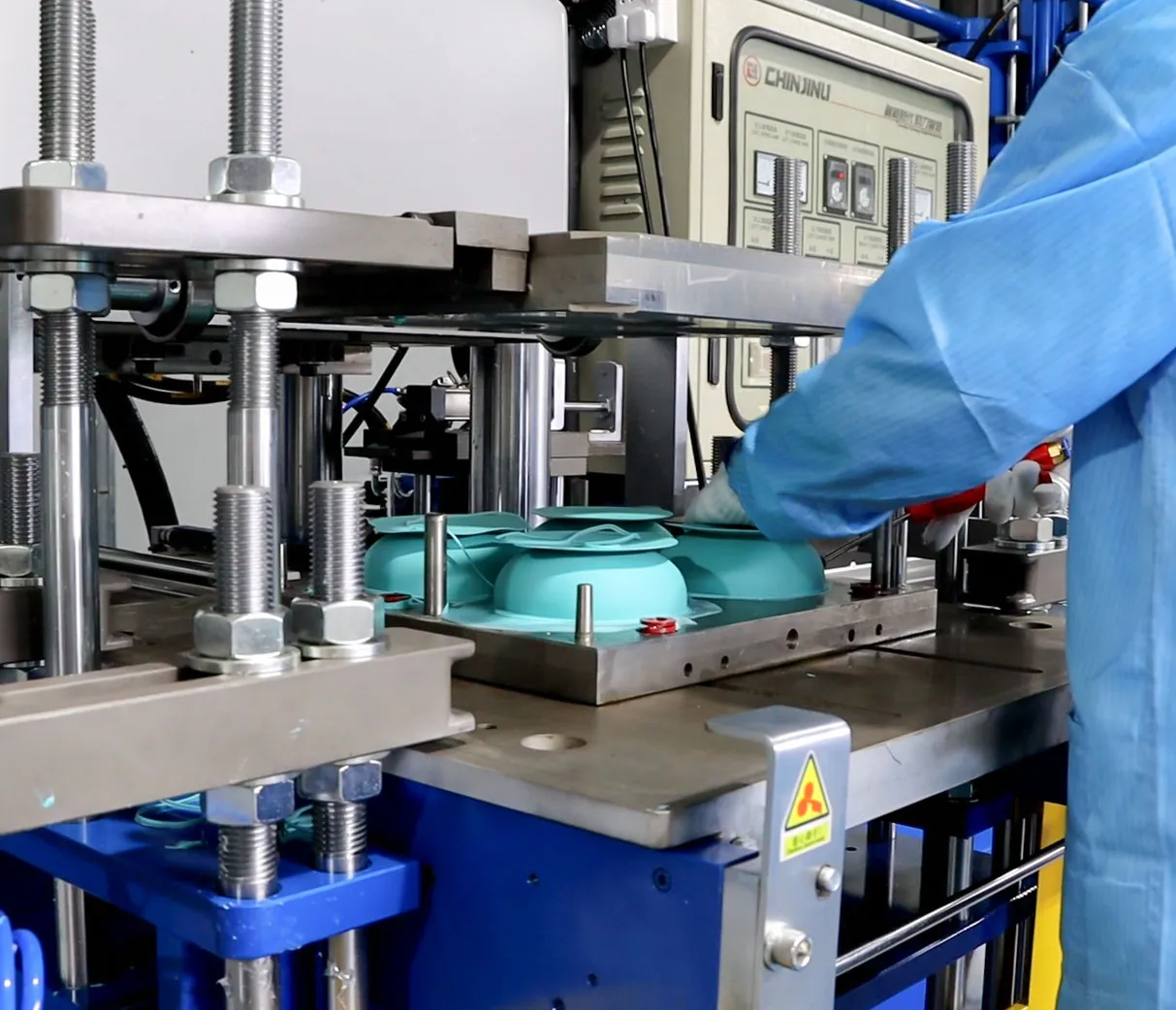
Compression molding is another technique used in silicone molding. It involves placing a pre-measured amount of uncured silicone rubber into an open mold cavity and then closing it with a hydraulic press. The heat and pressure applied during the process cause the material to cure and take on the shape of the mold.
Transfer molding
Transfer molding is similar to compression molding but involves transferring the material from a pot through a sprue into a closed mold cavity under heat and pressure. This technique is ideal for producing complex shapes with intricate details.
Extrusion molding
Extrusion involves forcing uncured silicone rubber through a die to produce continuous lengths of tubing or profiles with uniform cross-sections. This technique is suitable for producing gaskets, seals, and other products that require uniformity in shape.
Calendering
Calendering is another technique used in silicone molding that involves passing uncured silicone rubber between two rollers to produce sheets or films of uniform thickness. This technique is ideal for producing electrical insulation materials, medical-grade tubing, and other products that require precise thickness control.
Each of these techniques has its unique principles and characteristics that make it suitable for specific applications. By understanding these processes’ fundamentals, manufacturers can choose the best technique for their product’s desired properties and production volume.
